
Giving ourselves permission
This morning, five of us gathered in the multipurpose room at a local elementary school. All women. All eager. No one who called themselves “a legit artist.”
I opened the way I always do — by asking each person what they were bringing into the room. One came with curiosity. One came with wrist pain and the quiet thrill of being somewhere without her kids. One came wanting to learn something new.
I came with gratitude I couldn’t quite contain — two weeks out from an ER visit, aware in a new way of what it means to have hands, to be a maker, to get to do this at all. I said it briefly and moved on. The morning wasn’t about that.
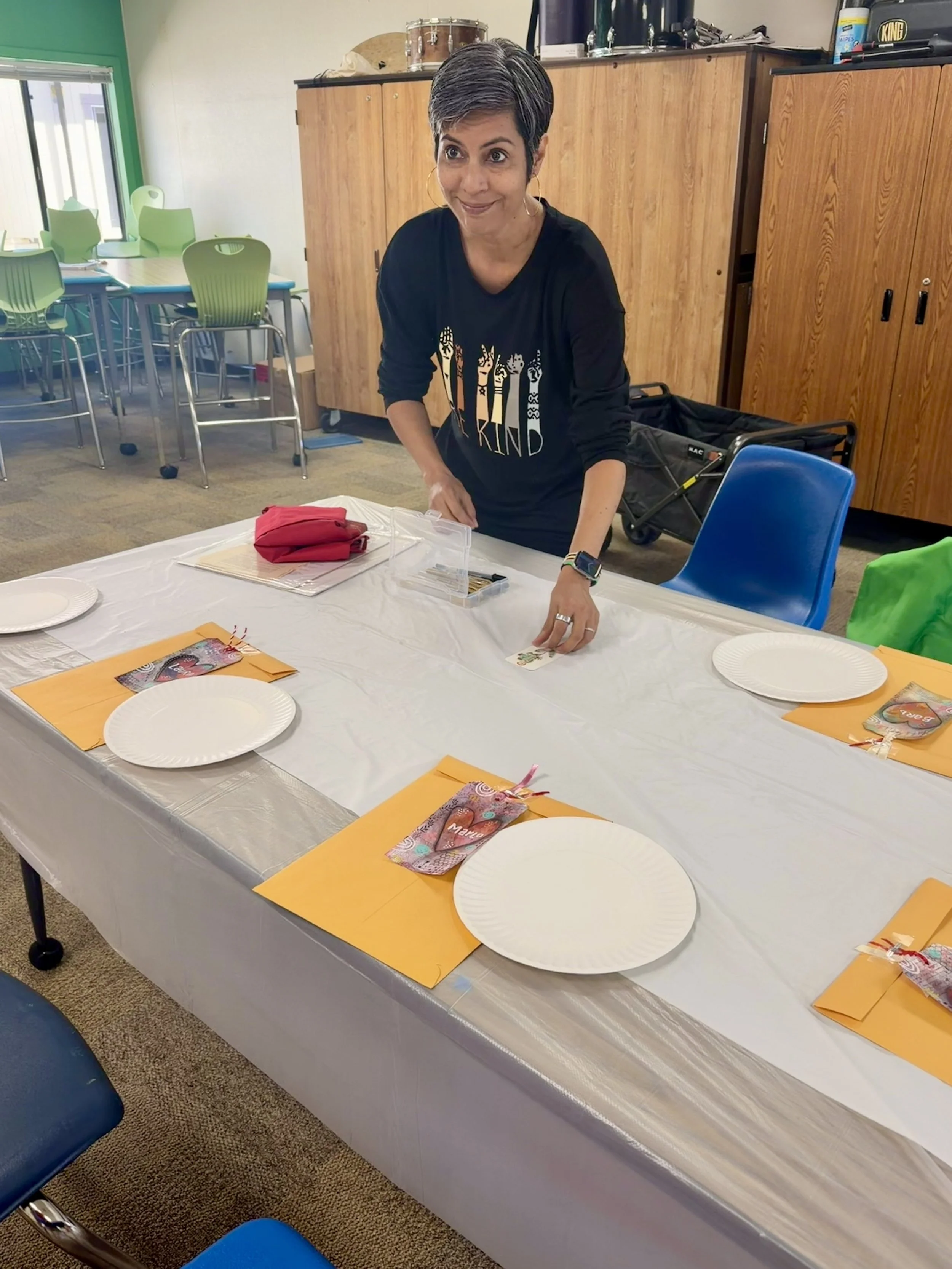
It was about starting blind.
Eyes closed, I asked each person to reach into a pile of paint tubes and pull out one color without looking. Then, eyes open, I asked them to pick a second color — specifically the one they were sure wouldn’t go with the first. The one their brain flagged as wrong. Red and blue. Ochre and brown. Pink and taupe.
What happened next is what always happens, and I never stop being delighted by it. They dipped their fingers in the colors, made marks on a square sheet of white paper for 10 seconds and passed it on to the next person. They winced. They laughed. And then, before any of them had time to decide whether they liked it, I handed out scrapers and gave them three seconds each to drag a line through the wet paint.
One, two, three. Done.
The point wasn’t the marks. The point was the three seconds.
When you have three seconds, you don’t plan. You don’t consult the color wheel. You don’t think about what a scraper line is supposed to look like. You just do the thing, and then it’s already done, and you’re looking at something that exists — something you made — and it came from nowhere you could have predicted.
This is the RIPPLE Practice at its core. Not the acronym, not the framework — though those are there if you want them. It’s this: the brain is the enemy of play.
Not thinking is a skill. And the fastest way to acquire it is to give the brain less time than it needs to interfere.
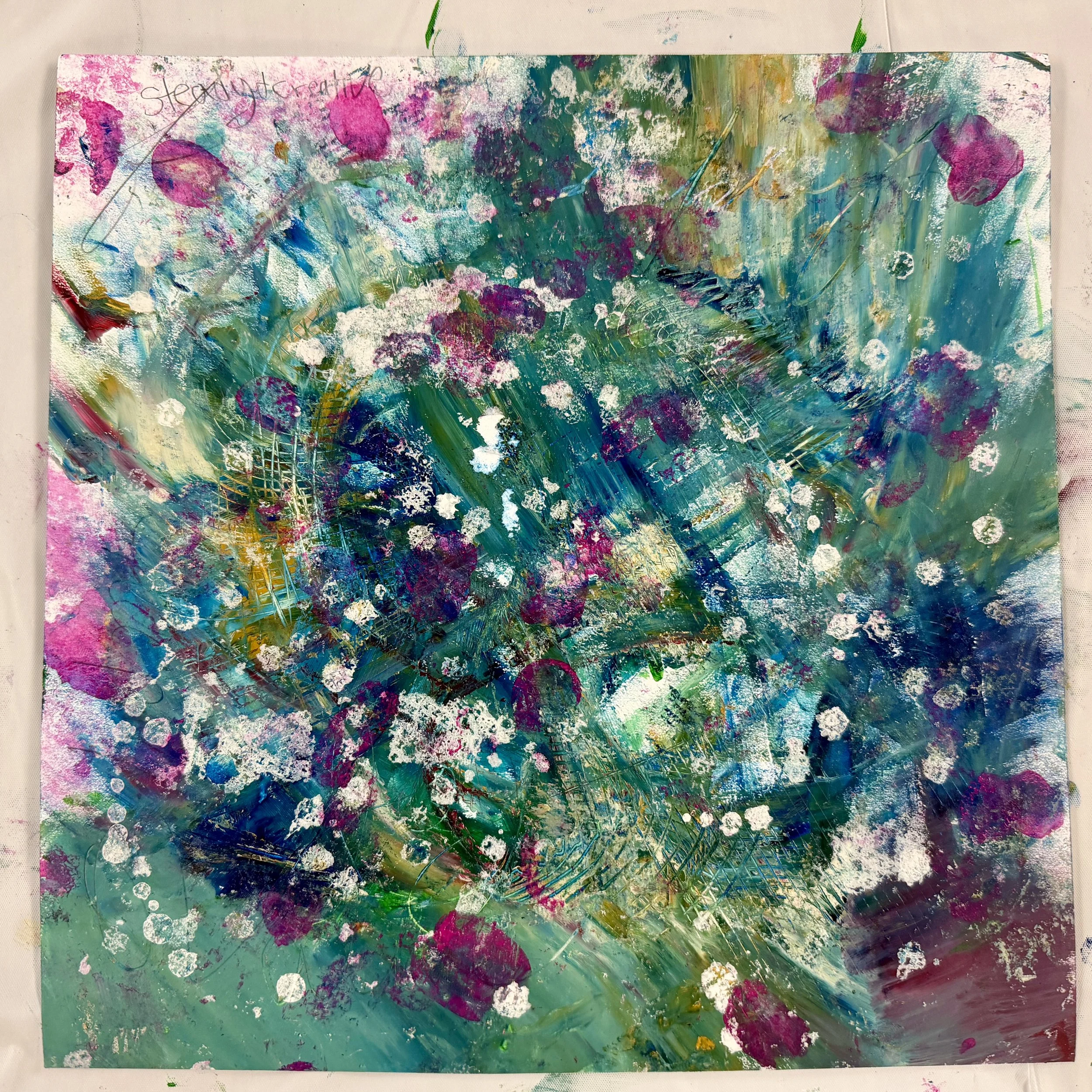
This was our painting: five hands, energies, scrapers, visions, blending into one
We had made a painting together without intending to. Everyone’s colors and fingerprints bleeding into everyone else’s. Then I cut it up.
I asked each person to flip their piece over and sketch something — a flower, a heart, a sun, whatever came. Then cut around it with scissors. No die-cutting machine, no template. Just hand and blade and whatever shape emerged.
The scissors did something interesting. People slowed down. They looked. They made decisions. And I watched them notice themselves making decisions — the slight tension in the shoulders, the hesitation before the first cut. Fussy cutting has a different quality than finger-painting. It has intention in it. Which is exactly why I follow the chaos with it. You need to feel the difference between surrender and control before you understand that both are available to you.
Then the punchers. Thirty seconds, a specific shape, done. The emotion that came with the punchers was different again — lighter, almost silly. Pop. Pop. Pop. No one was precious about it.
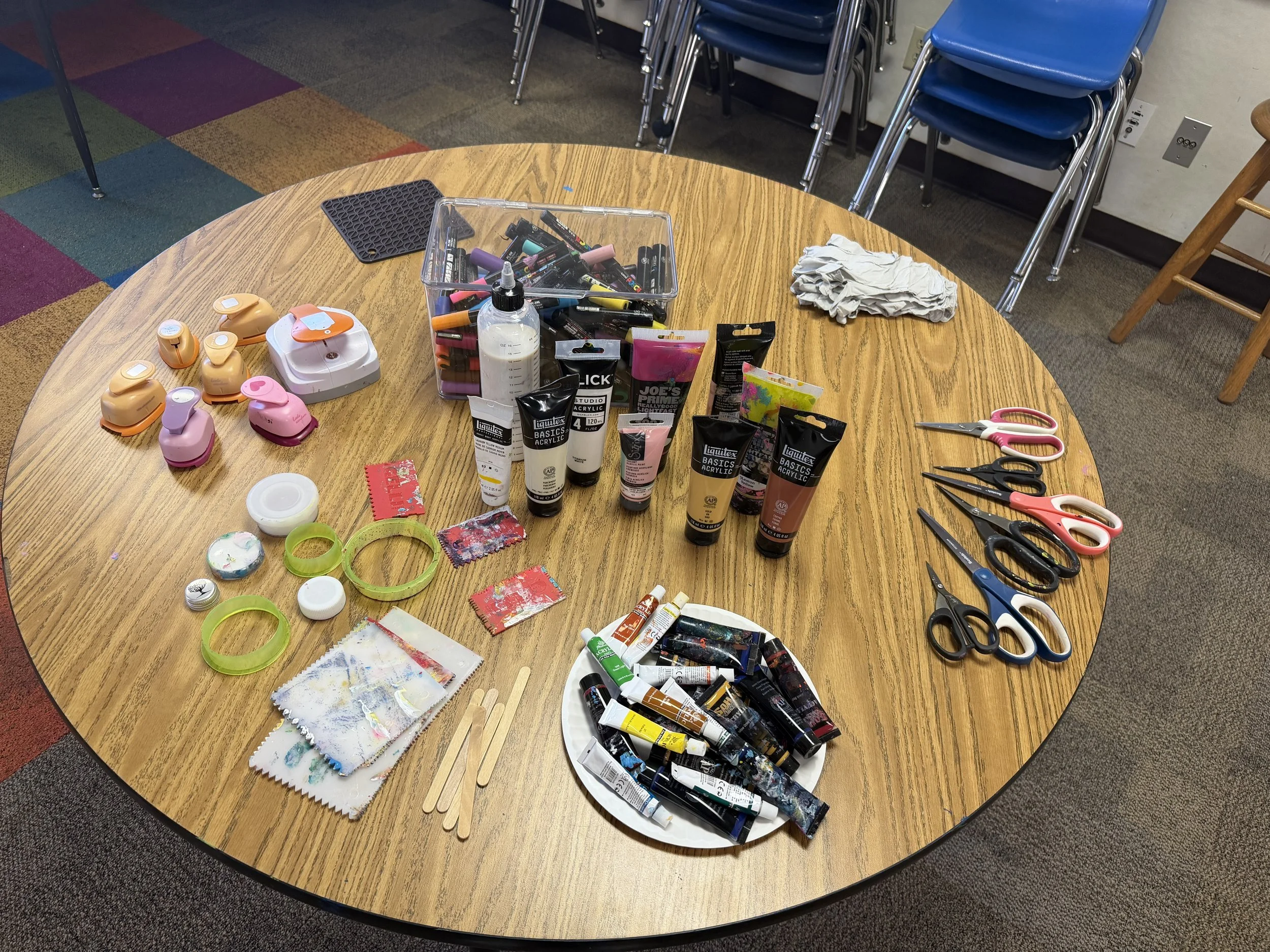
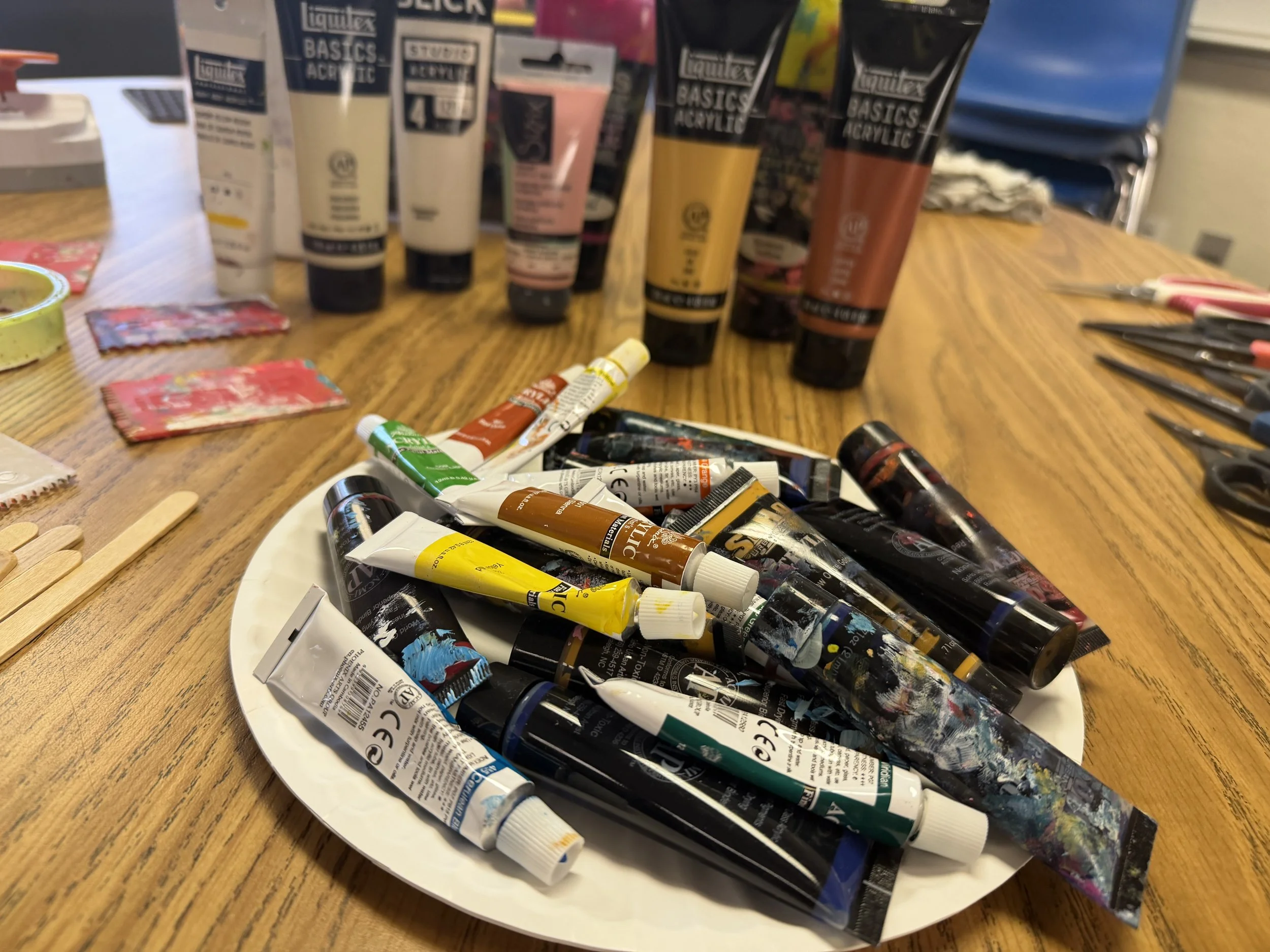
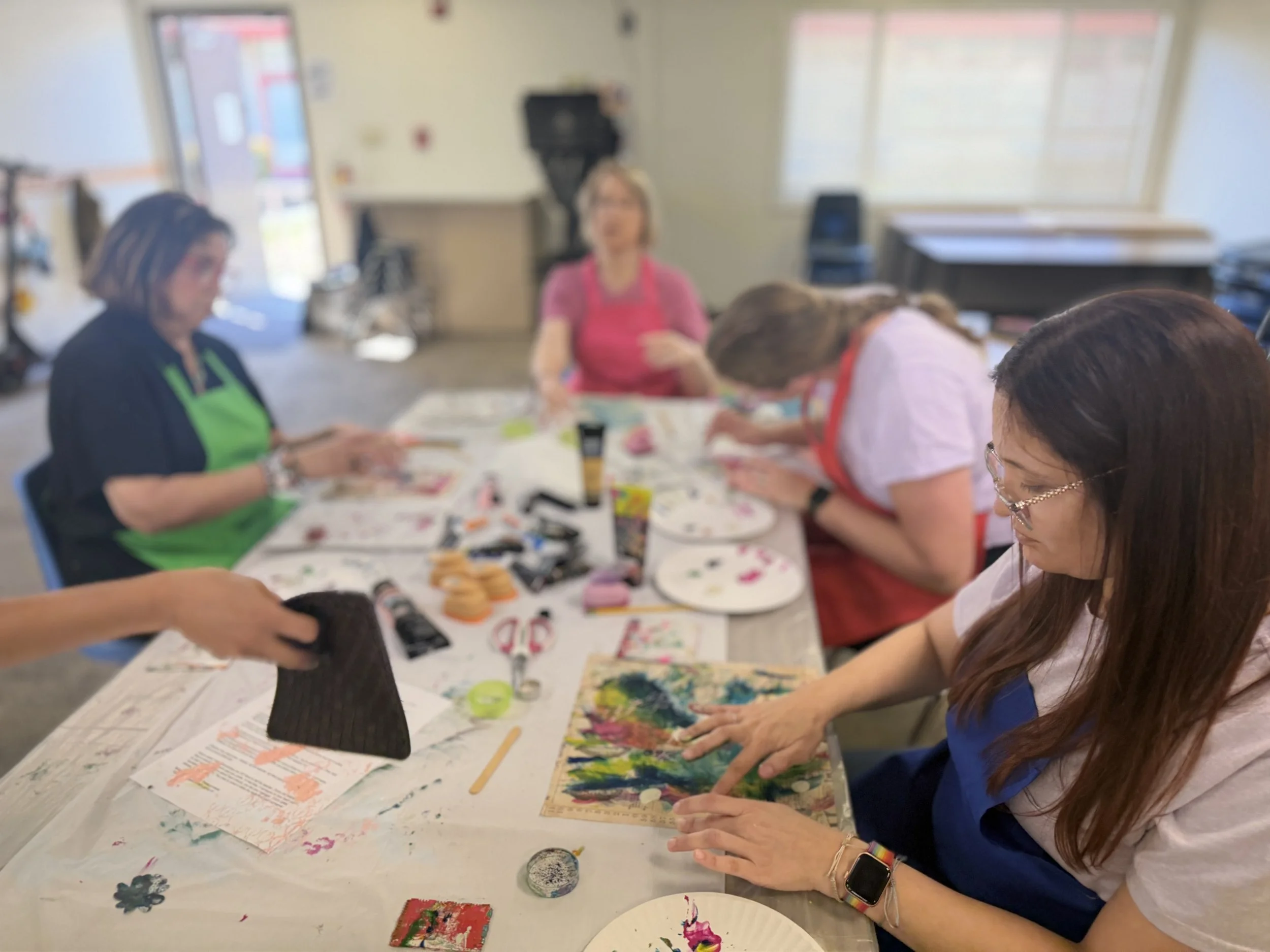
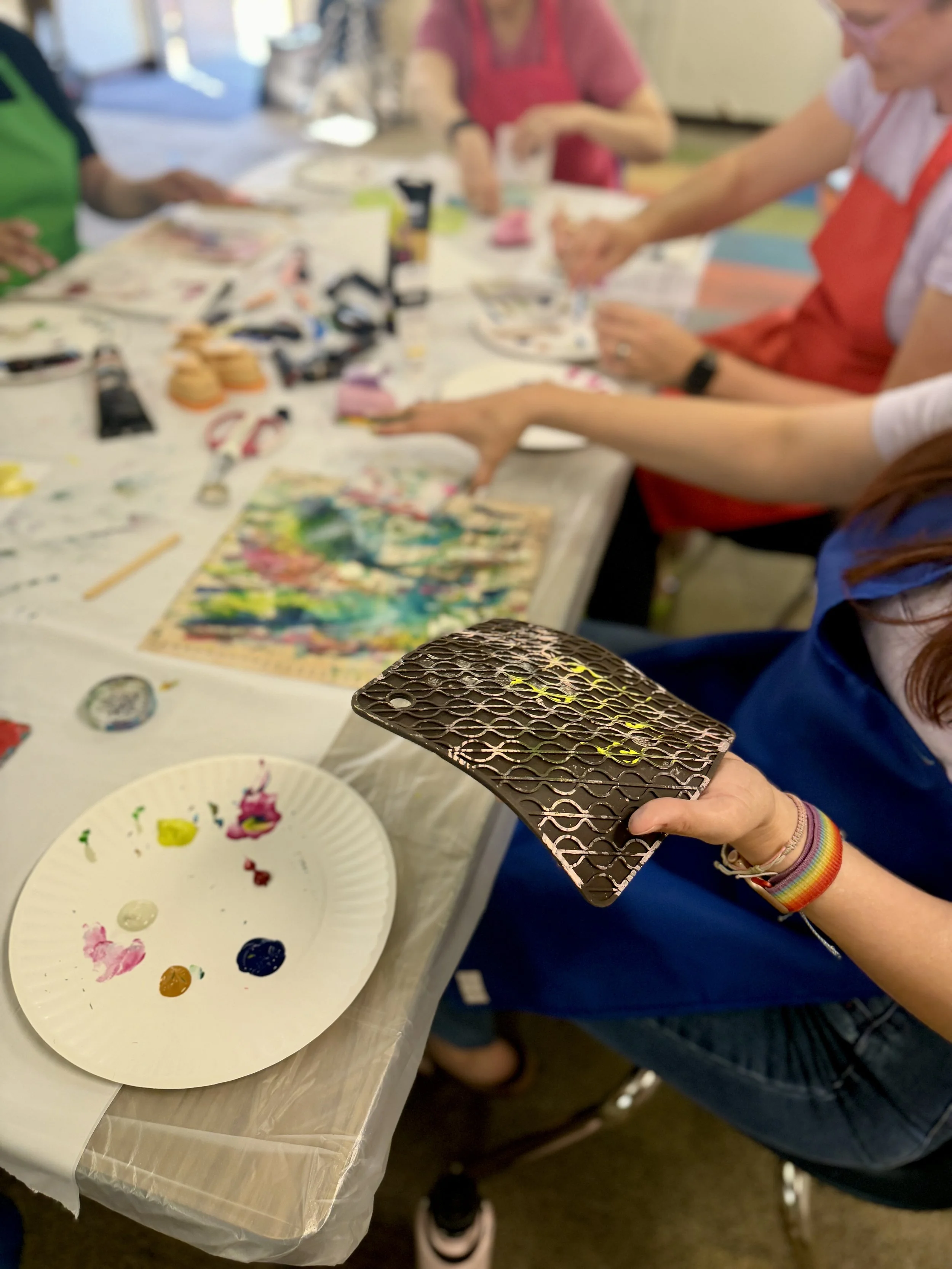
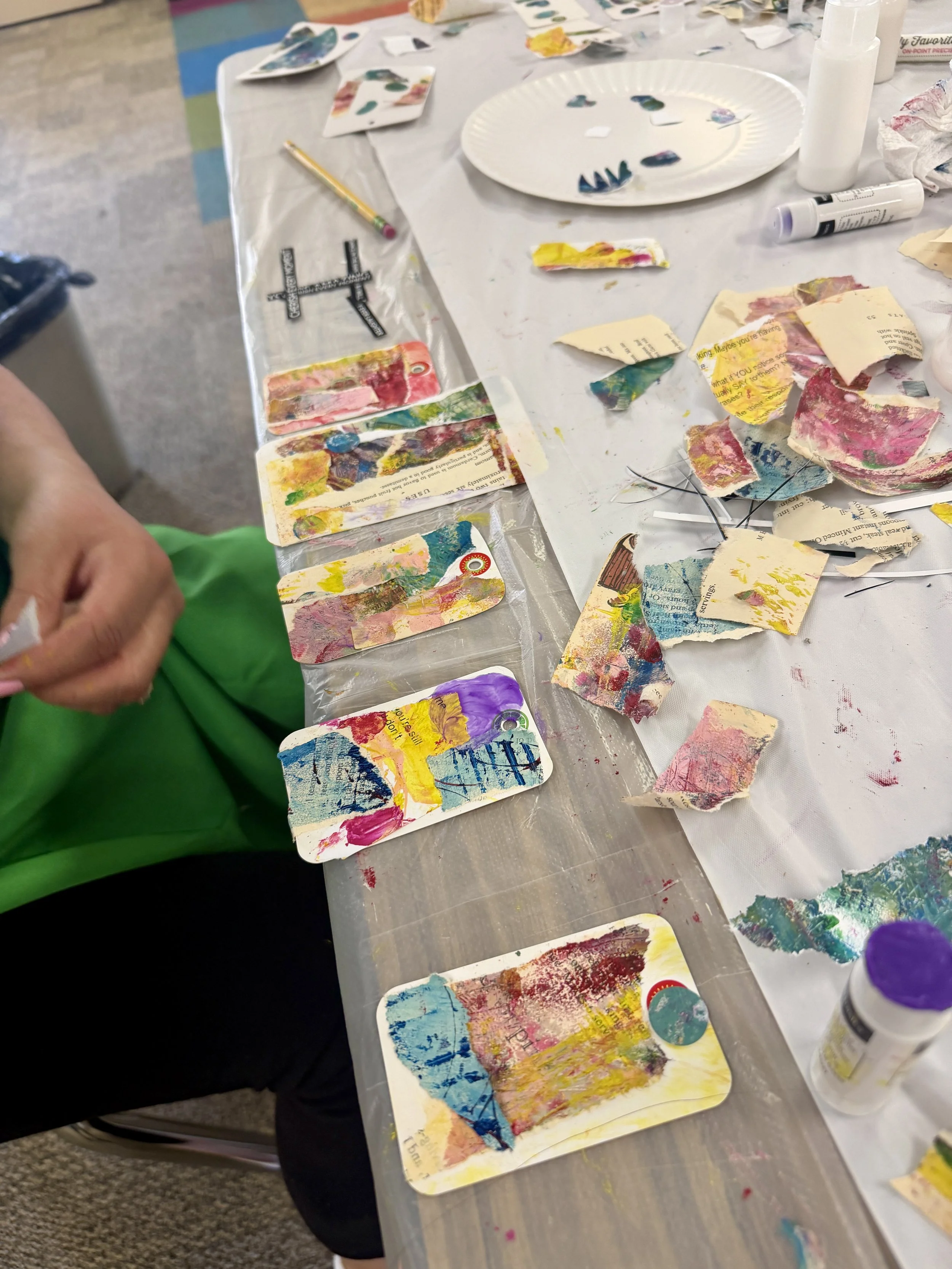
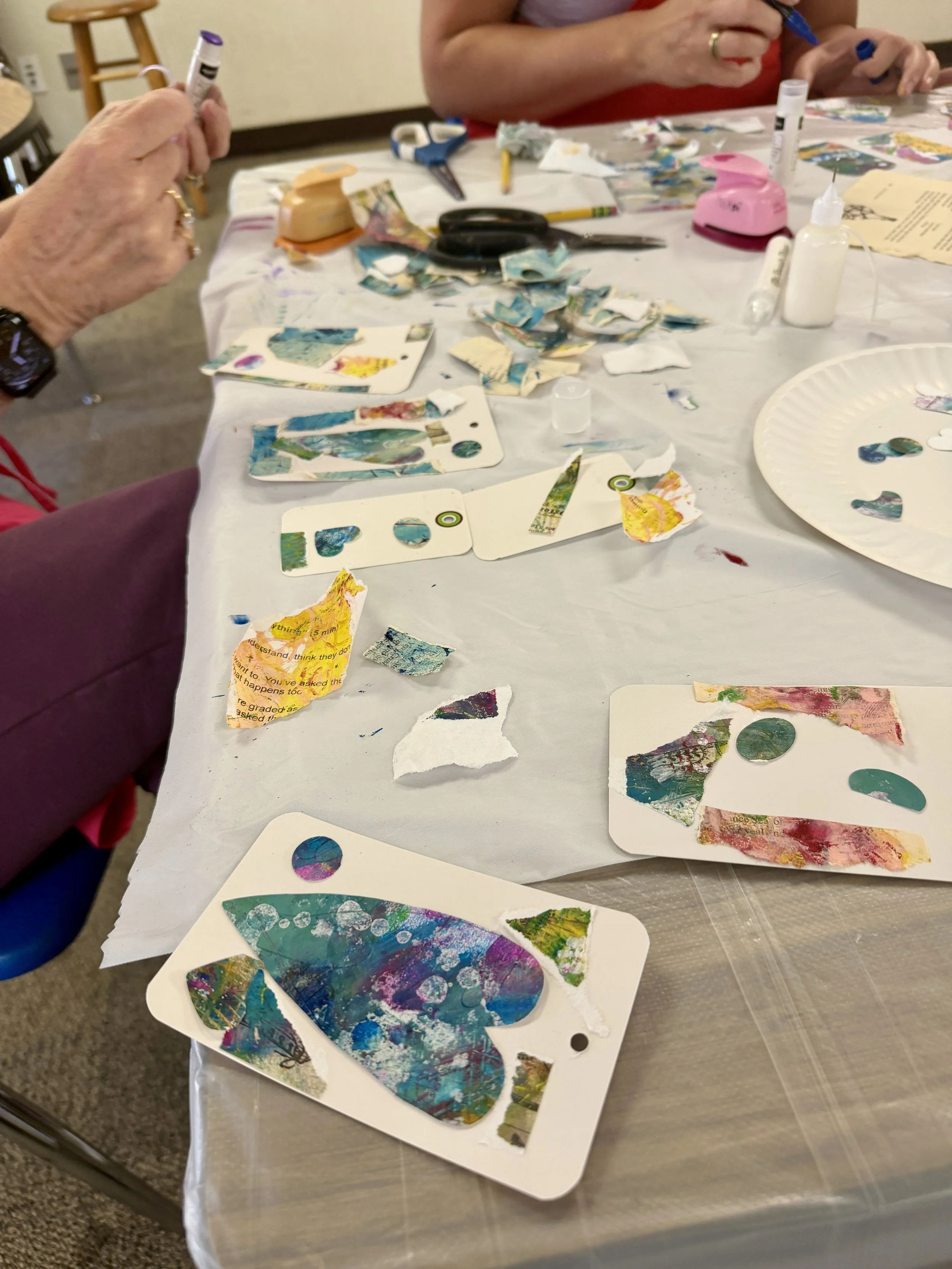
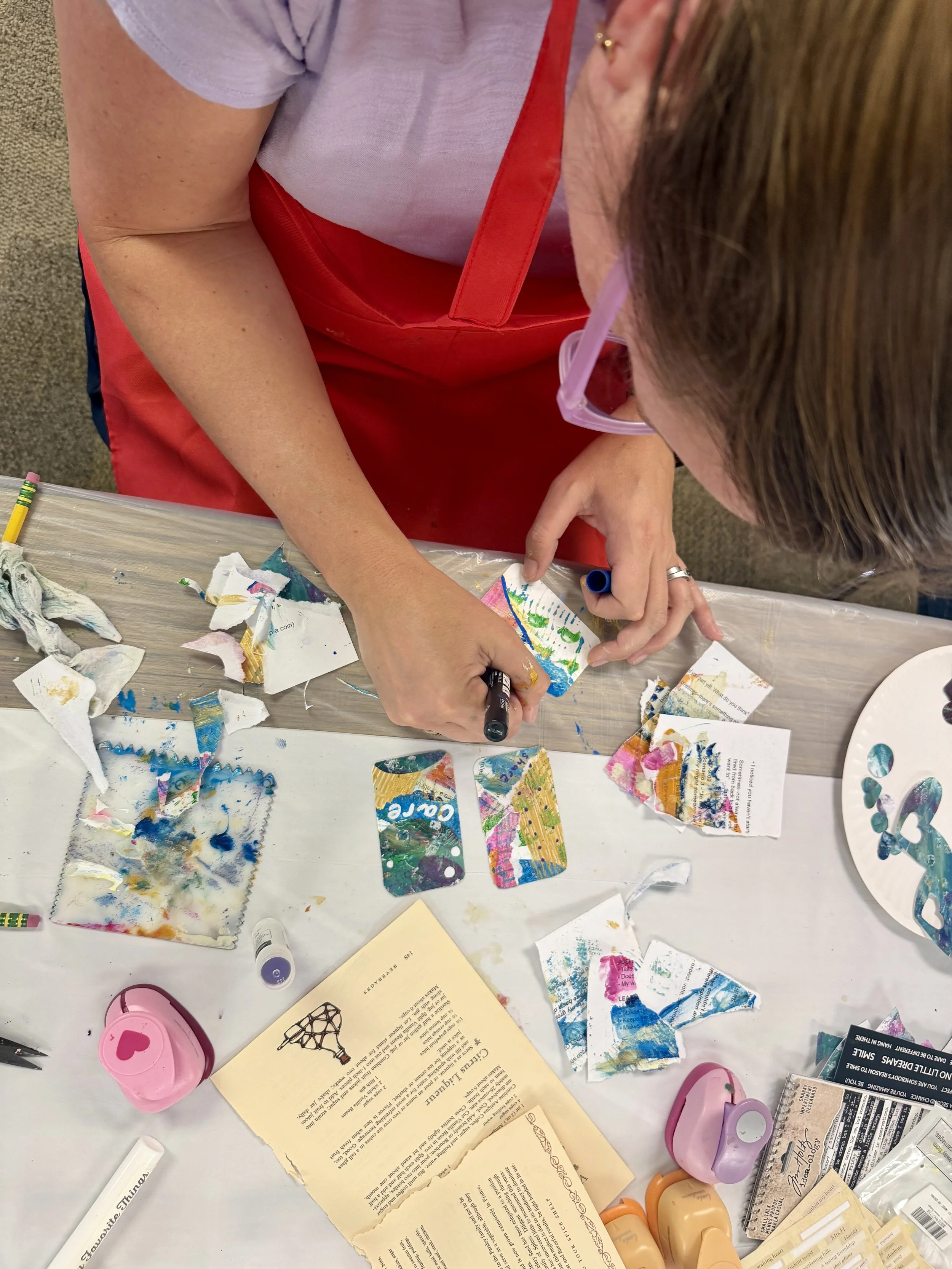
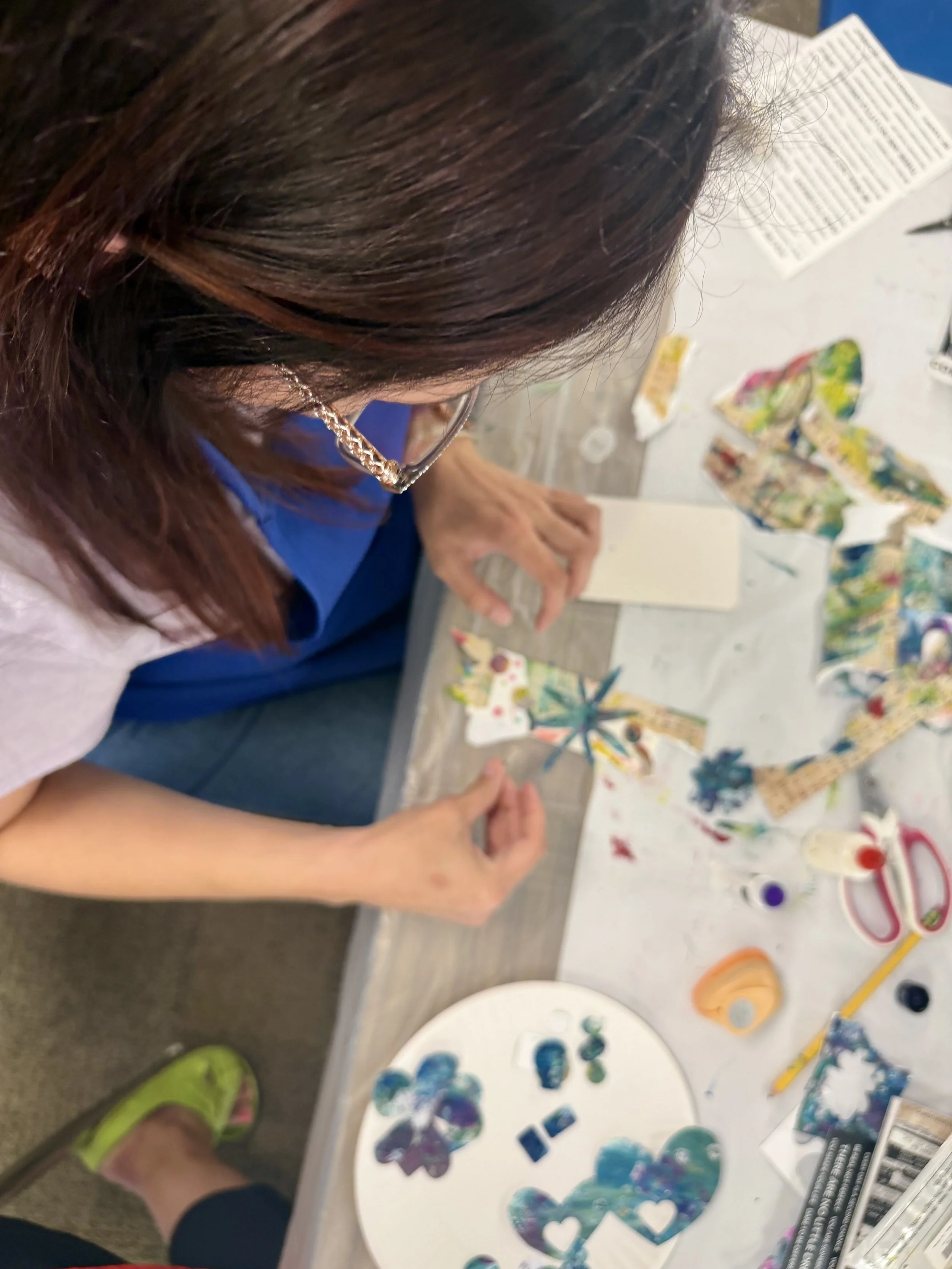
Each person walked away with a piece of what we'd made together, and no two pieces looked the same.
They drew motifs on the reverse side, cut them out; used punchers and got some additional “structured” shapes, each movement eliciting a different emotion. We noticed what we were feeling when using scissors to fussy cut … how it felt different to punch shapes.
Each person walked away with a piece of what we’d made together, and no two pieces looked the same.
Near the end, someone said: I feel like I’m in an experiment.
She didn’t mean it as a criticism. She meant: something is happening here that I don’t have a word for yet. Something is shifting. I’m not sure what I thought creativity was before, but I think I thought it required talent, or training, or at least a plan. And now I’ve made something — something I’d actually give away to a clerk at Trader Joe’s — and I had none of those things going in.
That’s exactly it.
The tokens we made at the end — small collaged pieces meant to be handed to a stranger — are the outward form of the practice. But the practice itself is the permission.
Permission to not know. Permission to make mud. Permission to stop before you ruin it, because you can always make more, and this one is already done, and it’s already enough.
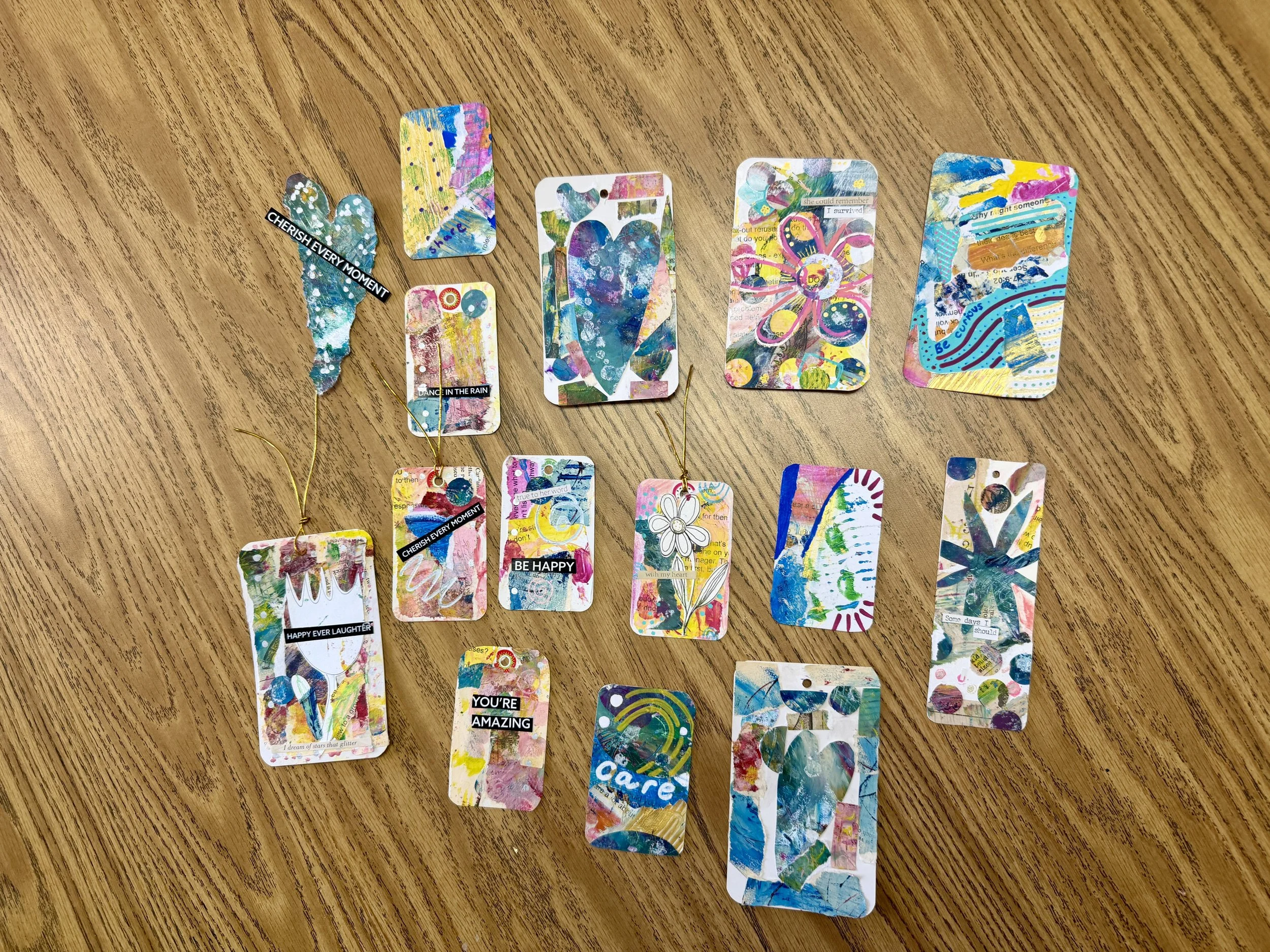
That one painting carrying its energy into all these tokens, each made with attention and intention.
માનસી