
What the Page Doesn’t Show
A few weeks ago, I shared this spread after a Ripple Room gathering.
At the time, I’d made it using my fingers, watercolor, and stencils. It felt fluid. Intuitive. Almost effortless — the way some making does when your nervous system is soft and receptive.
Last evening, I returned to the exact same pages.
This time, I picked up a brush.
And I used Liquitex liquid gouache for the first time.
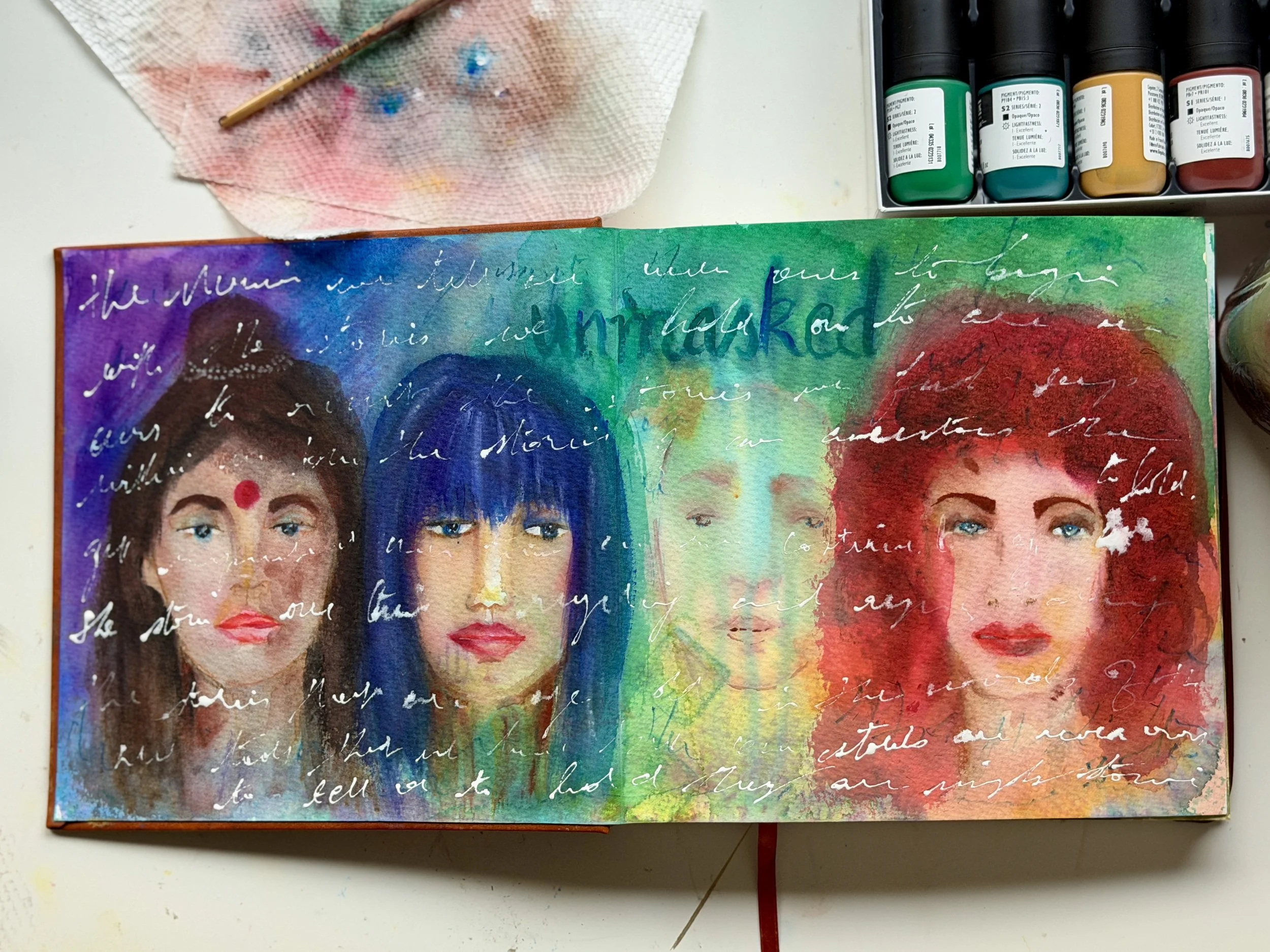
From the outside, the difference is subtle. The colors are richer. The faces look more defined. Some might even say the second version looks more “finished.”
But inside my body, the experience was completely different.
Holding the brush felt destabilizing.
It required control—a kind of precision that immediately pulled me out of flow and into performance. My hand tightened. My breathing became shallow. I found myself thinking instead of responding.
Gouache is deeply pigmented and beautiful, but it doesn’t forgive the way watercolor does. It asks you to commit. To place color deliberately instead of letting it wander.
And I realized something as I sat there, feeling frustrated and oddly resistant: it wasn’t the paint that was hard. It was the shift from touch to tool.
When I paint with my fingers, there’s no distance between me and the page. My body is directly involved. It feels instinctive, almost primal.
With a brush, there’s suddenly a layer between intention and expression. A mediator. A translator.
And that distance changed how safe I felt to experiment.
Watercolor is the medium that once made me stop calling myself an artist. When I was nineteen, someone told me I would never be one. I believed them.
I put my paints away and didn’t return to art for almost two decades.
When I did come back at thirty-eight—after my daughter was born—I didn’t return through watercolor. I found my way back through gel plate printing, fluid acrylics, finger painting. Messy, forgiving mediums that didn’t demand precision or control. Those forms felt safe. They didn’t wake up the old voice.
Watercolor does. Gouache does.
It was about stepping into a space where my body still remembers what it once felt like to be judged. And suddenly, the page no longer felt like play.
It felt like evaluation.
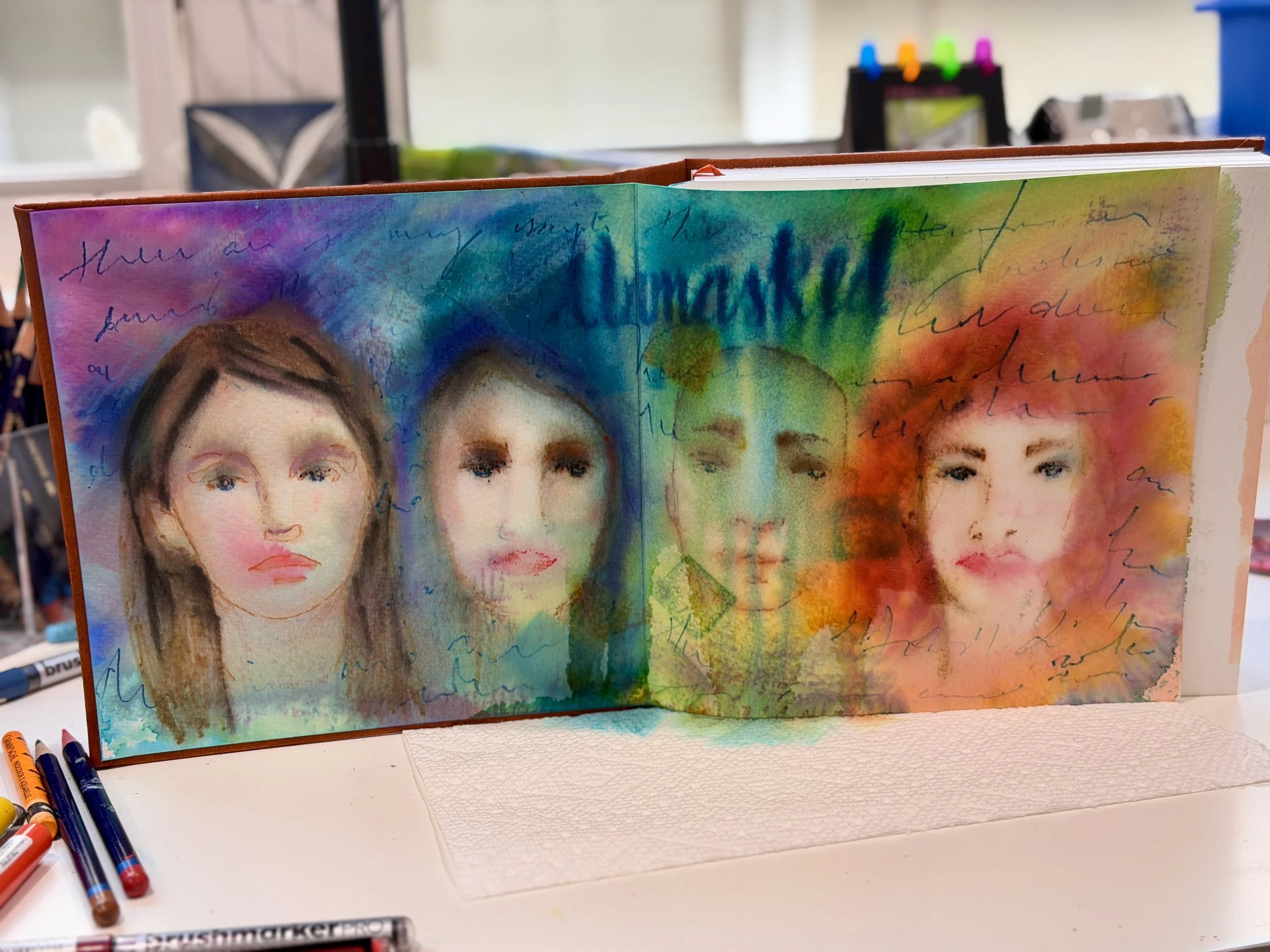
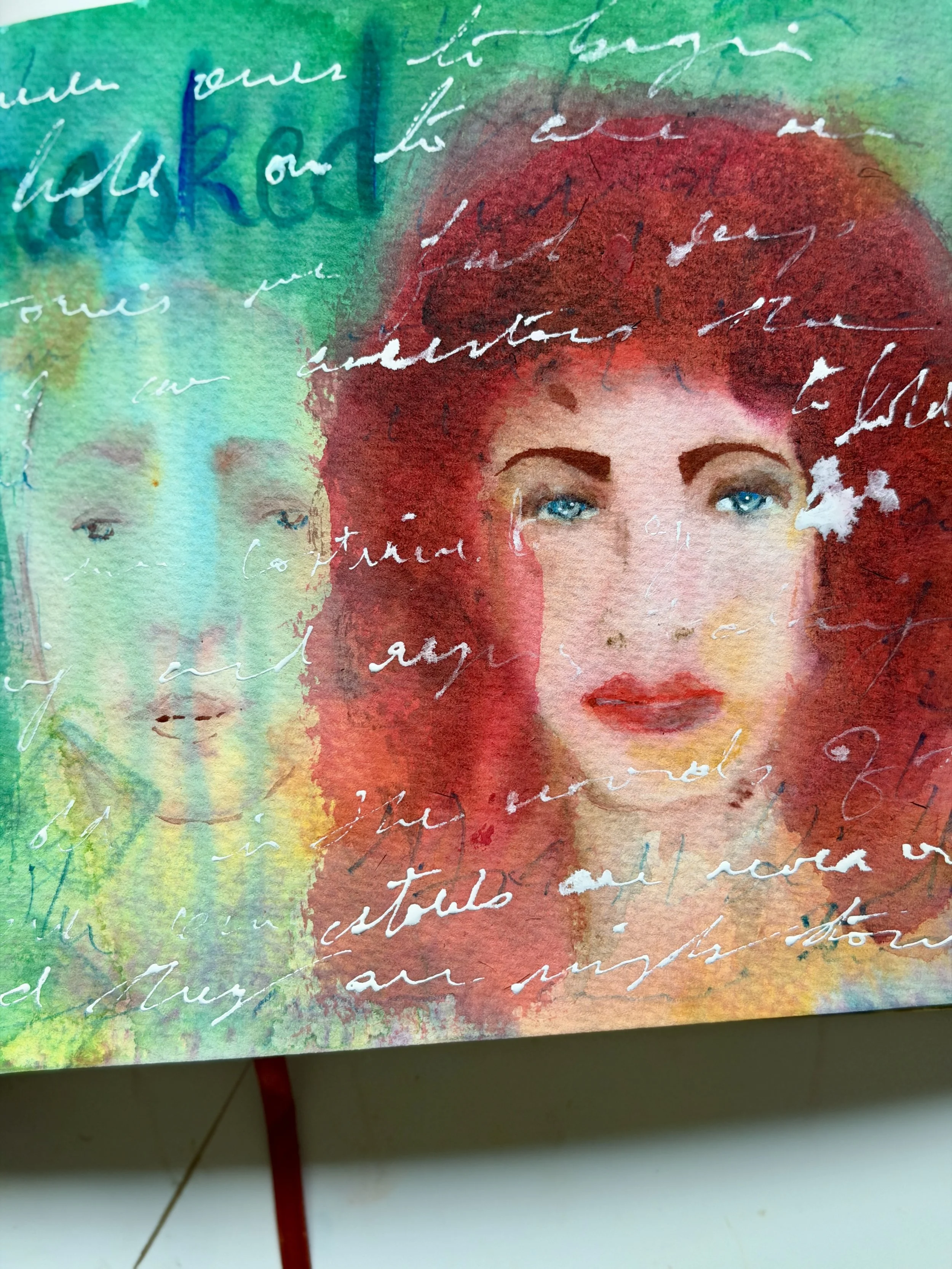
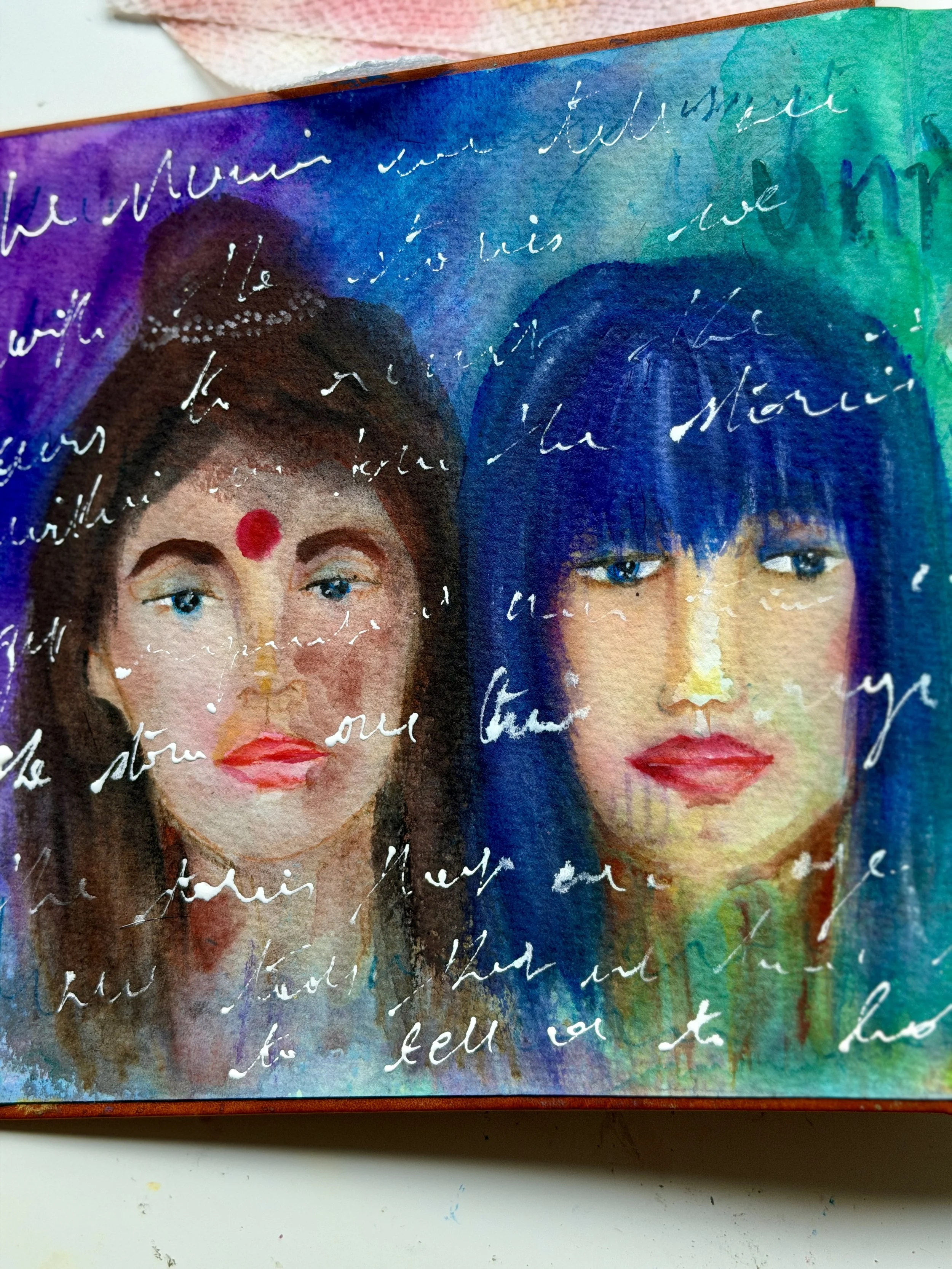
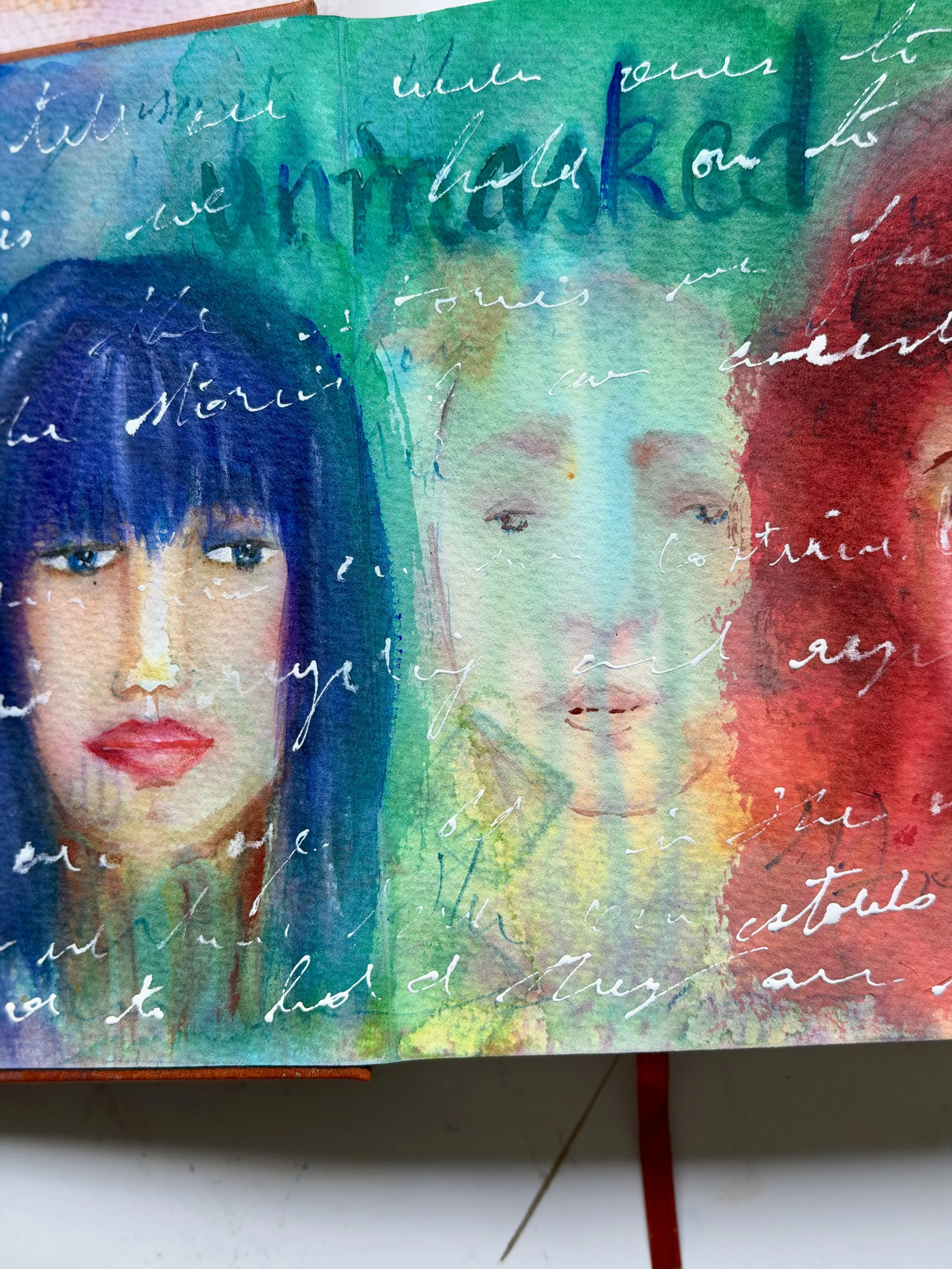
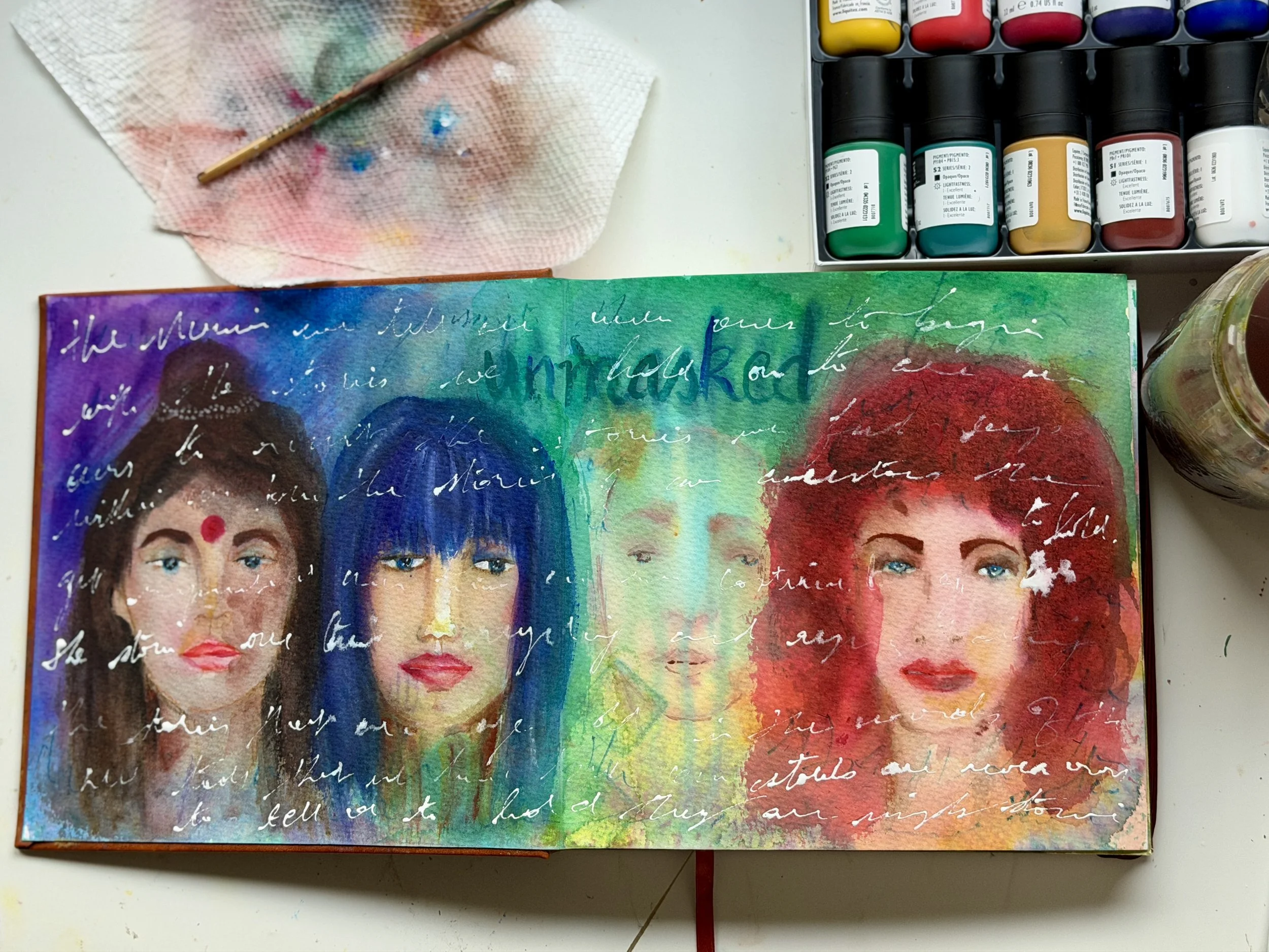
Looking at the two versions side by side, you wouldn’t know any of this.
You wouldn’t see the tension in my shoulders. Or the urge to stop halfway through. Or how many times I almost put the brush down and walked away.
It’s interesting when you think about it…do we ever see the finished piece revealing the emotional landscape of making it?
Sometimes what looks polished was actually uncomfortable to create.
Sometimes what looks messy was the most liberating experience.
The page holds the marks. But it doesn’t hold the nervous system state that made them.
A Different Kind of Self-Kindness
When I wrote about this spread earlier, I spoke about self-kindness looking like making art with your fingers because brushes feel like performance. Last night expanded that understanding.
Self-kindness can also look like noticing when an old wound is being touched … and not forcing yourself to override it. It can look like saying: “This is hard not because I’m failing, but because something in me still remembers.”
And allowing that to be part of the process.
Or even: “You don’t have to do this at all.”
I’m not rushing to decide whether I “like” brushes.
What interests me more is what the experience revealed:
How quickly I leave flow when precision enters.
How much safety I associate with direct touch.
That creativity isn’t just about skill or technique.
It’s also about history.
About the places where we once stopped.
About what it takes to return.
Which feels, in many ways, like a metaphor for life.
We often see outcomes. Rarely the internal negotiations that produced them.
Maybe This Is the Deeper Practice
Sometimes the most significant thing is not what we create, but the fact that we are willing to sit again at a page we once walked away from. Trying again, even when the body remembers fear. Letting the past and present coexist on the same surface.
Not to prove anything.
Just to stay in relationship with your own creative life.
માનસી